
How to Build a Digital Product Empire on Social Media (2025 Guide)
Stop renting your audience. Start owning your income.
For years, the “influencer” dream was sold as a path paved with brand deals and sponsored posts. You create content, a brand pays you, and you repeat the cycle. But if you’ve been in this game for more than a minute, you know the flaw in that model: you don’t own the relationship, and you definitely don’t own the paycheck.
I remember looking at my dashboard a few years ago. I had good engagement, but my income was entirely dependent on whether an algorithm showed my post to a brand manager. It felt precarious. It felt like a trap.
The real shift happens when you stop being just a “creator” and start being a founder. According to Kit’s State of the Creator Economy 2024, a milestone 28% of creators now report being self-employed, moving away from traditional 9-5 jobs. And they aren’t doing it through ads; they are doing it by selling their own knowledge.
This guide isn’t just about “how to sell digital products on social media.” It’s about building an asset class that pays you while you sleep. We’re going to cover everything from validation to the specific “comment automation” strategies that are crushing it right now.
What You Will Learn
Why 2025 is the Year of ‘Social Commerce’ for Digital Products
The landscape has changed. We used to use social media to escape reality; now, we use it to upgrade our reality. The era of pure entertainment is blending rapidly with education.
If you think people aren’t looking to learn on TikTok or Instagram, look at the data. A 2024 report from Thinkific/Google reveals that 47% of 18-25 year olds primarily use TikTok for learning rather than traditional search engines. They aren’t Googling “how to budget”; they are searching TikTok for a “budgeting template.”
The Rise of the “Nano-Educator”
You might be thinking, “I don’t have enough followers.” Let me stop you right there. The days where you needed 100k followers to make a full-time living are over. In fact, smaller is often better for conversion.
This trust translates directly to sales. When you have a smaller, tighter community, you aren’t just a billboard; you’re a trusted friend recommending a solution. This is why Teachable’s 2024 Creator Milestones report shows creators have generated over $10 billion in global earnings. The money is there; you just need to capture it.
Phase 1: Validating & Creating Your “Hero” Product
The biggest mistake I see creators make is spending three months writing an ebook that nobody wants. You need to validate before you create. But first, let’s talk about formats. What actually sells?
Top-Performing Digital Product Formats
Based on passive income ideas for creators trending in 2025, here are the winners:
- Templates (High Utility): Notion dashboards, Canva social media kits, or Excel budget trackers. These sell because they save time.
- Ebooks/Guides (Deep Dive): Solving a specific problem (e.g., “The 30-Day Gut Health Reset”).
- Mini-Courses (High Perceived Value): A 60-minute video series often commands a higher price than a 200-page PDF.
According to Thinkific’s 2024 report, 92% of people dedicate at least one hour per month to learning digitally. Your product just needs to fit into that hour.
The “One-Story” Validation Method
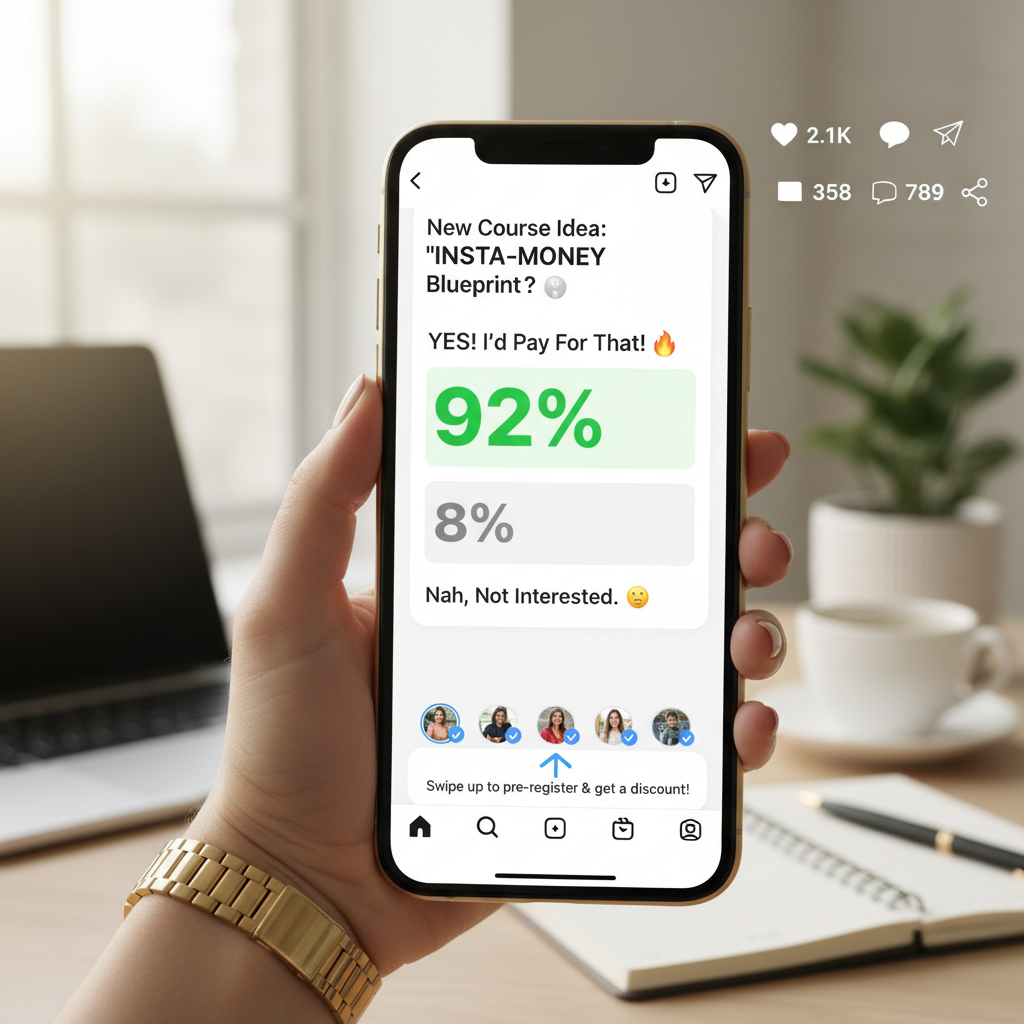
Before you open Google Docs, post an Instagram Story with a poll.
“I’m thinking of putting together a checklist on how I edit my photos. Would you guys be interested? YES / NO”
If you get 20 “YES” votes, reach out to them via DM. Ask them what specifically they struggle with. Build the product for those 20 people. This approach ensures you have customers before you even launch.
Phase 2: The Tech Stack (Setting Up Your Storefront)
You do not need a custom website. I repeat: you do not need to spend $3,000 on a web designer. In the creator economy, friction kills sales. You want a mobile-optimized storefront that lives in your link-in-bio.
Platform Comparison: Choosing Your Engine
Here is a breakdown of the top tools for selling digital downloads on mobile:
| Platform | Best For | Pros | Cons |
|---|---|---|---|
| Stan Store | Social-first creators (TikTok/IG) | One-click checkout, mobile-native design, built-in funnel. | Monthly fee ($29/mo) can be high for total beginners. |
| Gumroad | Marketplace discoverability | Free to start (no monthly fee), handles VAT tax automatically. | Higher transaction fees (10%) on the free plan. |
| Shopify | Scaling to a full brand | Complete customization, powerful apps. | Overkill for a single PDF; requires setup time. |
For most creators starting out, Stan Store or Gumroad are the go-to options. They reduce the clicks between “I want this” and “Purchase complete.”
Also, pay attention to the user experience. Thinkific data indicates that 48% of consumers are willing to pay for downloadable content from creators they follow, but if the checkout process is clunky, they bounce.
Phase 3: The “Social Funnel” Marketing Strategy
Posting random content won’t build a digital product empire. You need a strategy that moves people from “unaware” to “ready to buy.” This is often called the social commerce sales funnel.
Most creators operate on the “Look at me” model. You need to switch to the “Value-First” model.
The 80/20 Content Rule
- 80% Education/Entertainment: Solve small problems for free. This builds authority.
- 20% Promotion: specific calls to action (CTAs) for your paid product.
Platform-Specific Tactics
Instagram Monetization Strategy
Use Reels to cast a wide net (Top of Funnel). Focus on hooks that address a pain point. Use Stories to nurture that audience (Middle of Funnel). Show behind-the-scenes of you creating the product. Show testimonials.
TikTok for Digital Products
TikTok is a search engine. Use keywords in your text overlays like “Best digital planner for ADHD” or “Canva template selling guide.” Linktree’s 2024 Creator Report found that 52% of creators earning $50k-$100k spend 10 hours or less per week on content creation. They aren’t working harder; they are optimizing for search intent on platforms like TikTok.

Phase 4: Automating Sales with DM Automation (The Secret Weapon)
Here is the “gap” in most advice you’ll read online. Most articles tell you to “put the link in your bio” and pray.
The problem? Social algorithms hate when you send people off the platform. If your caption says “Link in bio,” the algorithm often throttles your reach.
The Solution: DM Automation (using tools like ManyChat).
How It Works
- The CTA: You post a Reel saying, “Comment the word ‘GUIDE’ below and I’ll send you my free checklist.”
- The Engagement: Users comment “GUIDE.” This signals to the algorithm that your post has high engagement, so it shows the post to more people.
- The Automation: Your bot automatically replies to the comment (“Sent it over! check your DMs!”) and sends a private message with the direct link to your store.
- The Conversion: Direct messages have significantly higher open rates than passive bio links.
This strategy is a game-changer for low-content digital products. It turns a passive follower into an active lead instantly.
Phase 5: From Social Follower to Email Subscriber
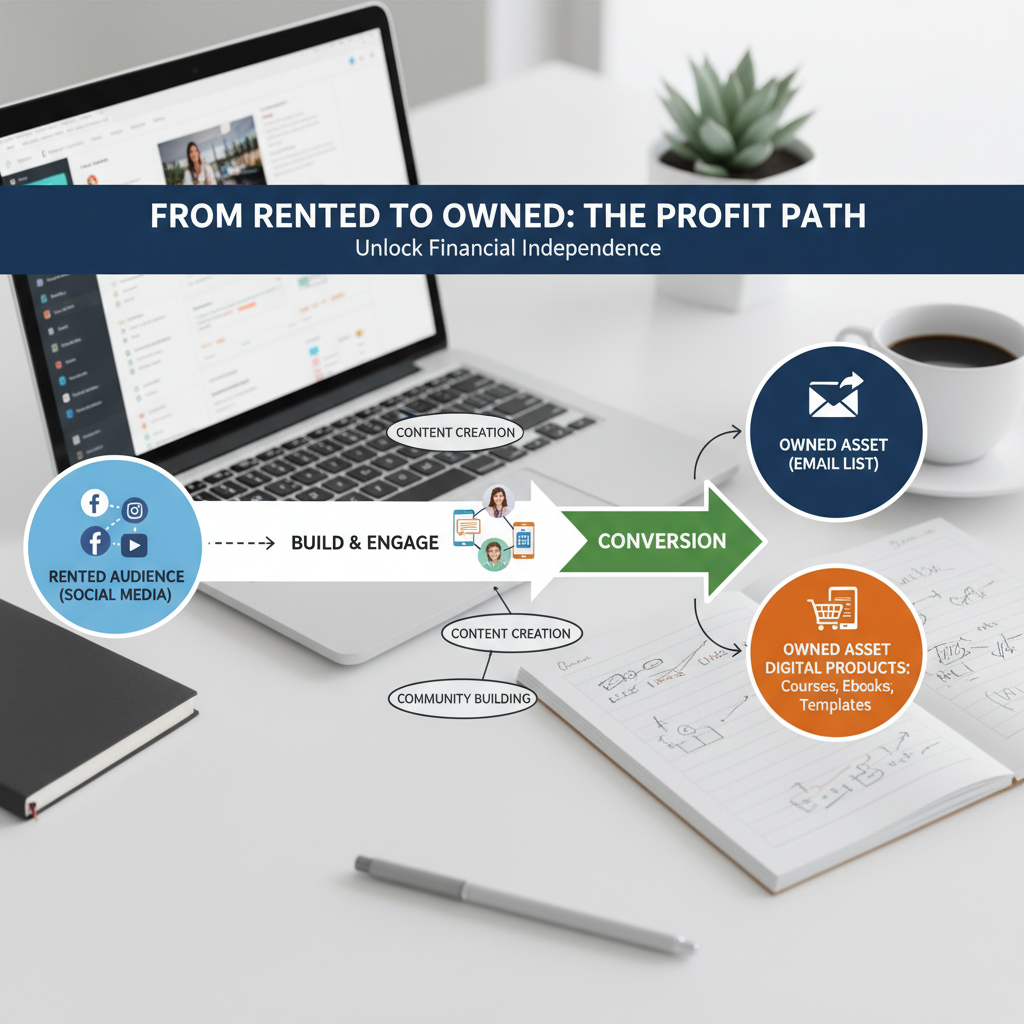
I cannot stress this enough: Social media is rented land. Instagram could ban your account tomorrow. TikTok could be banned by the government next week.
According to Kit’s 2024 report, 27% of creators cite email as their best engagement channel, compared to only 15% for Instagram. Why? Because you own the list.
The “Tripwire” Funnel
Don’t just sell. Capture the email.
- Lead Magnet: Offer a free sample (e.g., “Free Chapter of my Ebook”).
- The Upsell: Once they download the freebie, redirect them immediately to a “One Time Offer” page for your $27 full product.
- The Sequence: If they don’t buy, your automated email sequence nurtures them over the next 5 days.
This $480 billion projection isn’t just about ad revenue—it’s about the commerce that flows between creators and their audiences.

Legal & Logistics: What Nobody Tells You
It’s not the fun part, but if you want an empire, you need to act like a business.
1. Digital VAT/Sales Tax: If you sell to customers in Europe or the UK, you are technically liable for VAT. This is where platforms like Gumroad or Paddle shine—they act as the “Merchant of Record” and handle this compliance for you. If you use Stripe directly on a custom site, you are responsible for calculating and remitting that tax.
2. Copyright: Can you sell a template you made in Canva? Generally, yes, provided you are selling a “flattened” PDF or using a template link that directs them to use their own Canva account. However, you cannot resell Canva’s Pro elements as standalone assets. Always check the licensing terms.
FAQ: Digital Product Sales
Where can I sell digital products for free?
Gumroad and Ko-fi allow you to start selling with no monthly subscription fees. They only take a percentage of your sales (transaction fee) when you actually make money, making them ideal for beginners testing the waters.
What is the most profitable digital product to sell?
While online courses often have the highest price point ($97-$997), templates (Notion, Canva, Excel) often have the highest conversion rate because they solve an immediate problem with a “done-for-you” solution.
Do I need a business license to sell digital products?
Generally, yes. Even as a sole proprietor, you are conducting business. Requirements vary by country and state, so check your local municipality. However, platforms like Gumroad handle the sales tax remittance for you in many jurisdictions.
How do I market digital products without showing your face?
Faceless marketing is a huge trend. You can use stock aesthetic footage (from sites like Pexels or your own B-roll), screen recordings of your digital product in action, or text-heavy motion graphics on Reels/TikTok to sell without being on camera.
Conclusion: The Ownership Imperative
The shift from “influencer” to “digital entrepreneur” is the most important career move you can make in 2025. The data from Goldman Sachs and Kit is clear: the creators who win are the ones who build assets, not just audiences.
You have the tools. You have the knowledge. The only thing missing is the execution.
Your next steps:
- Pick one specific problem your audience has.
- Create a simple solution (guide, template, list) in under 48 hours.
- Set up a simple storefront on Stan Store or Gumroad.
- Post a piece of content that asks people to comment a keyword to get it.
Don’t wait for perfection. Launch, learn, and iterate. The empire starts with the first sale.