

YouTube Shorts vs. Instagram Reels: How to Monetize Short-Form Video Fast in 2026
Stop waiting for the “Creator Fund” pennies. If you are still posting videos hoping to get rich off views alone, you are playing a 2022 game with 2026 rules. I’ve worked with creators who pull millions of views but can barely pay their rent, and others with 5,000 followers who generate consistent, full-time income.
The difference isn’t viral luck; it’s monetization architecture.
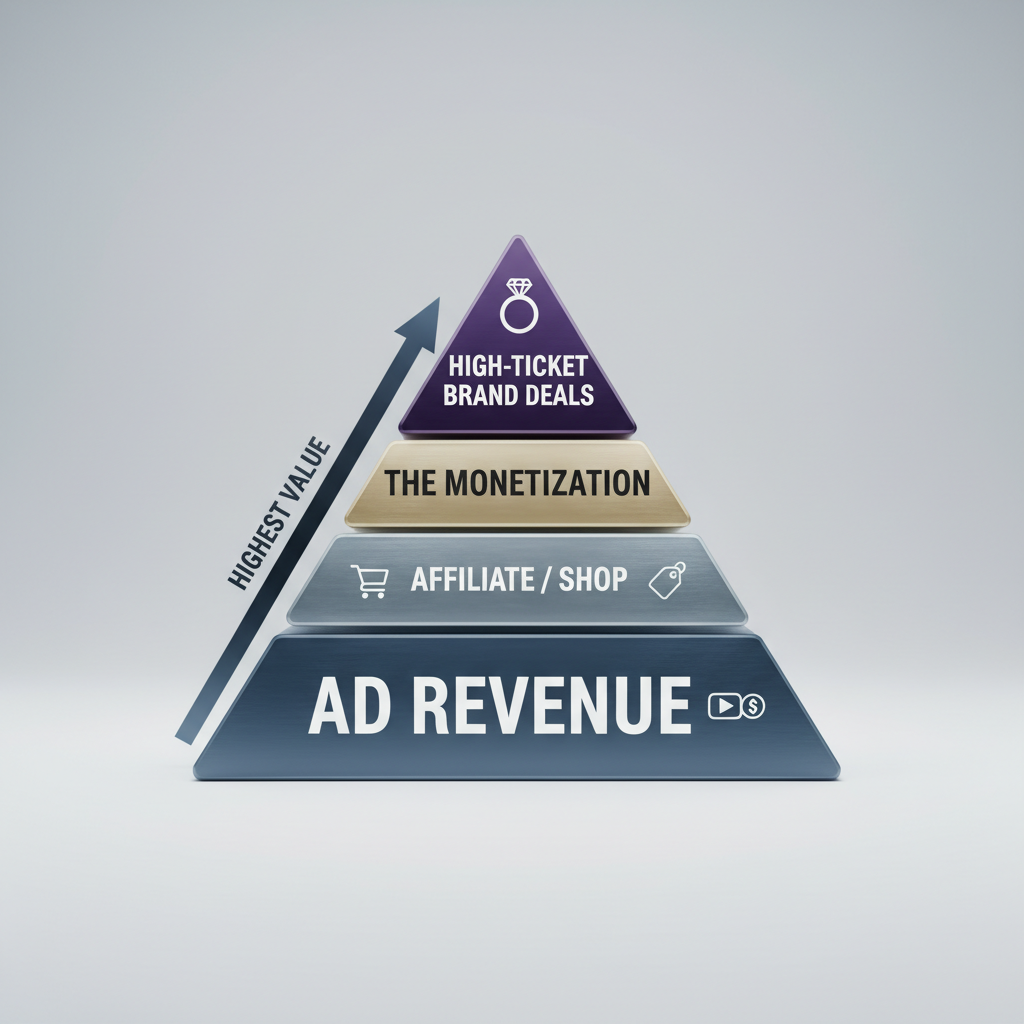
Look, the creator economy is no longer a “wild west.” It is a sophisticated industry projected to hit nearly half a trillion dollars. According to Goldman Sachs, the total addressable market of the creator economy will roughly double to $480 billion by 2027. But here is the catch: the money is shifting away from passive ad revenue and toward direct video commerce.
In this guide, we are going to dig into the exact mathematics of monetizing YouTube Shorts and Instagram Reels in 2026. No fluff, just the financial blueprints you need to turn content into cash flow.
The Landscape of Short-Form Monetization in 2026
Before we talk strategy, we need to understand the battlefield. The volume of consumption is frankly staggering, and it’s where your audience lives.
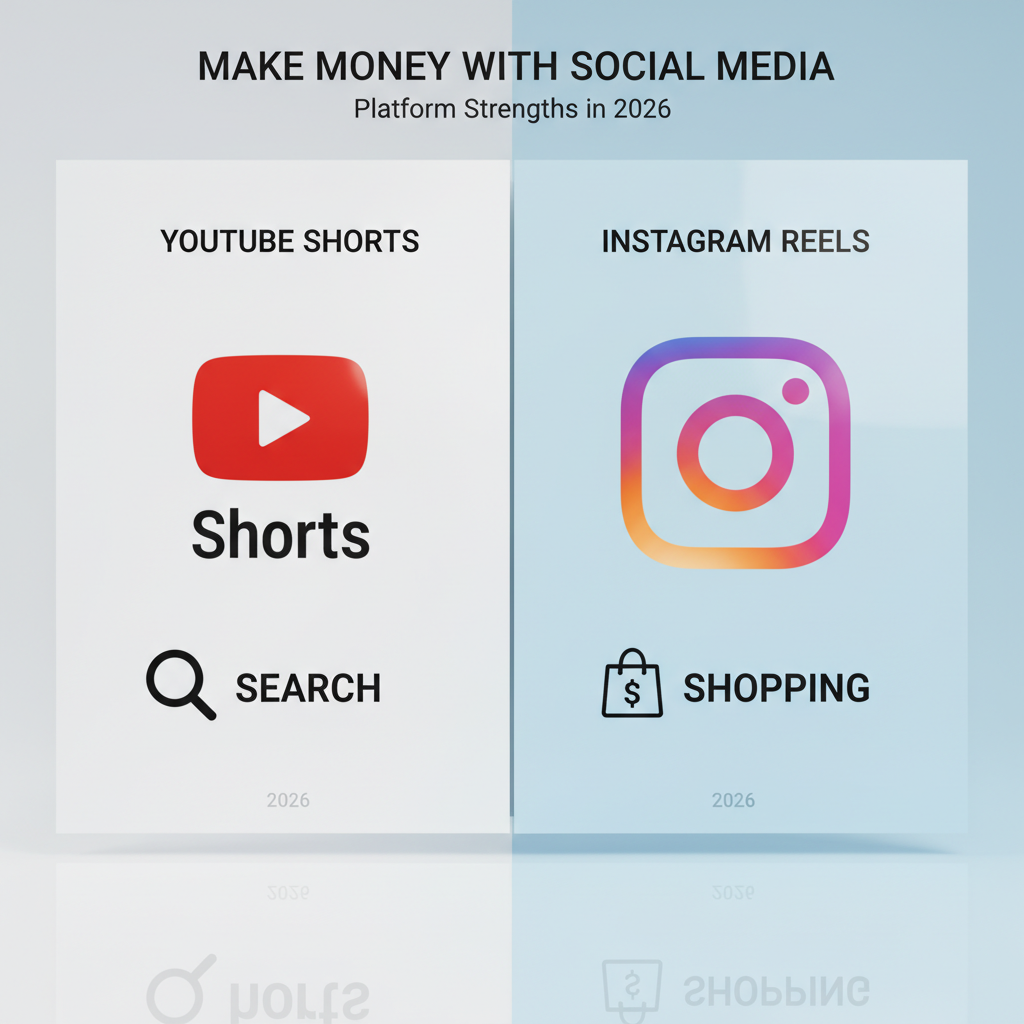
YouTube Shorts: The Search Engine Giant
YouTube Shorts isn’t just a TikTok clone anymore; it’s the primary discovery engine for the world’s largest video site. As of early 2024, YouTube Official Blog reported that Shorts were averaging over 70 billion daily views. That number has only climbed as we moved through 2025.
The superpower of Shorts is longevity. Unlike other platforms where content dies in 24 hours, Shorts are indexed in Google Search. I’ve seen Shorts posted six months ago suddenly spike in traffic because they ranked for a specific search query.
Instagram Reels: The Aesthetic Conversion Machine
Instagram remains the king of brand integration. While YouTube wins on search intent, Instagram wins on engagement and screen time. Recent data from Cropink indicates that Reels now account for roughly 35% of all time users spend on Instagram.
Reels have a reach rate of 30.81%, which is double that of other content formats on Instagram, making it the single most efficient way to grow an account today.
Source: Vidico Analysis (Feb 2025)
If you are looking to sell a lifestyle, a product, or a personal brand, the visual nature of Reels combined with high reach makes it indispensable.
Strategy 1: The “Platform Paycheck” (AdSense & Bonuses)
This is what everyone asks about first: “How much does the platform pay me?” I need to be honest with you—this is the slowest way to wealth, but it provides a necessary baseline.
YouTube Partner Program (YPP) 2025 Requirements
YouTube has bifurcated its monetization into tiers. This was a smart move to keep smaller creators motivated. You no longer need to hit the massive “10 million views” milestone just to get your foot in the door.
| Feature | Tier 1 (Fan Funding) | Tier 2 (Ad Revenue) |
|---|---|---|
| Subscribers | 500 Subscribers | 1,000 Subscribers |
| Shorts Views | 3 Million (last 90 days) | 10 Million (last 90 days) |
| Earnings Source | Super Thanks, Channel Memberships, Shopping (Own Products) | Ad Revenue Sharing (RPM), Premium Revenue |
According to the YouTube Official Blog, lowering these thresholds allowed thousands of creators to start earning through “fan funding” much earlier. However, the real passive income comes from Tier 2, where you share in the ad revenue.
The RPM Reality Check: How Much Do Shorts Actually Pay?
Here is where expectations often collide with reality. Unlike long-form video, where you might see RPMs (Revenue Per Mille, or 1,000 views) of $5.00 to $20.00, short-form inventory is cheaper.
According to data aggregated by DemandSage in late 2025, the average RPM for YouTube Shorts ranges between $0.01 and $0.06 per 1,000 views. This varies heavily by niche (finance pays more, pranks pay less).
This means to make a full-time income ($4,000/month) purely from Shorts ads at a $0.04 RPM, you would need 100 million views a month. That is why relying solely on AdSense is a trap for short-form creators.
💰 Short-Form Ad Revenue Estimator (2026)
Enter your projected monthly views to see the difference between YouTube Shorts and typical Instagram Bonus payouts.
Instagram’s Monetization State
Instagram has moved away from the confusing “Reels Play Bonus” of 2023 and toward a more integrated ad-sharing model and “Gifts.” While specific RPM data is opaque because Meta treats it as a discretionary bonus in many regions, Contra’s 2025 analysis suggests that Instagram’s ad revenue is projected to grow 20-25% year-over-year, driven primarily by Reels inventory. This means the pot is getting bigger, but access remains invite-only for many features.
Strategy 2: Video Commerce (The “Fast Money” Method)
If AdSense is the slow lane, Video Commerce is the autobahn. In 2026, the barrier between “watching” and “buying” has almost evaporated.
According to the HubSpot State of Marketing Report 2024, short-form video has the highest ROI of any social media marketing strategy. Why? Because it drives action.

YouTube Shopping Affiliate Program
This is the game-changer. YouTube now allows creators to tag products from other brands directly in their Shorts. You don’t need to own the inventory. You just tag a beauty product, a tech gadget, or a supplement, and when a viewer clicks and buys, you get a commission.
This is vastly superior to the old “link in description” method because it happens on-screen. I’ve seen conversion rates triple when the product is tagged directly in the video timeline compared to burying a link in the comments.
Instagram Shop & Product Tagging
Instagram’s ecosystem is even more mature for this. Zebracat data from March 2025 reveals that Instagram Reels campaigns yield an average conversion rate to website product pages of around 4.5%. That is incredibly high compared to standard display ads (usually <1%).
The Strategy:
- Create a Reel demonstrating a specific problem.
- Show the product as the immediate solution.
- Use the “Collaborator” feature or Product Tagging to link directly to the purchase page.
Brands report a 45% increase in website traffic after including direct product links in their Reels compared to those that don’t.
Source: Zebracat (2025)
Strategy 3: Brand Deals & UGC (User Generated Content)
You do not need 100,000 followers to get a brand deal in 2026. In fact, brands often prefer smaller creators.
Why Brands Love Micro-Influencers
Trust is the new currency. A creator with 10,000 loyal fans often generates more sales than a celebrity with 1 million passive followers. Recent studies show that Instagram Reels generate 22% more engagement than standard video posts, and micro-influencers drive the bulk of high-quality engagement.
UGC: Getting Paid Without Posting
This is a massive trend for 2026. UGC (User Generated Content) creators are paid to make videos for the brand’s channel, not their own. You don’t need followers; you just need to be good on camera.
Pricing Your Content:
Stop accepting free product in exchange for work. Here is a simple baseline formula for 2026:
- UGC Video (15-60s): $150 – $300 per video (Beginner)
- Sponsored Reel (10k-50k followers): $500 – $1,500 flat fee
7 Steps to Your First $1,000 Month
If I were starting from zero today, here is the exact roadmap I would follow to monetize fast.
- Niche Down Hard: Do not just do “fitness.” Do “kettlebell workouts for busy dads.” High CPM niches like Finance, Tech, and Real Estate pay double what generic entertainment pays.
- Batch Create with AI: Use AI tools to speed up your workflow. However, keep the human element. Faceless channels work, but personality brands monetize faster.
- The “Hook” Mastery: You have 3 seconds. If you don’t grab them, the swipe happens. Visually interrupt the pattern immediately.
- Cross-Platform Posting: Edit outside the apps (CapCut or Premiere). Post the raw file to Shorts, Reels, and TikTok. Remove watermarks!
- The “Link in Bio” Optimization: Use a tool like Linktree or Stan Store. Your first link must be the thing you talked about in the video.
- Community Tab Engagement: On YouTube, use the Community Tab to poll your audience. It keeps your channel active in the algorithm even on days you don’t post video.
- Direct Outreach: Once you have 50 good videos, DM brands. “I made a video using your product because I love it. Here are the stats. I’d love to make more for you.”
Future Trends: What to Expect in Late 2026
As we look toward the end of the year, two major shifts are occurring.
First, AI-Generated Content Policies are tightening. Platforms are beginning to require disclosure for AI content. Authenticity will become a premium asset. If you are a real human showing your face, your value goes up.
Second, Gen Z’s Search Behavior. According to Contra, Gen Z spends an average of 4.5 hours daily on social media, but they are using it as a search engine. They don’t Google “best skincare”; they search it on TikTok and Reels. Optimize your captions with SEO keywords, not just hashtags.
Frequently Asked Questions
How many views do you need on YouTube Shorts to make $100?
Based on the average RPM of $0.01 to $0.06 in 2025/2026, you would need approximately 1.6 million to 10 million views to generate $100 purely from ad revenue. This is why affiliate marketing is recommended for smaller channels.
Can I monetize Instagram Reels with a personal account?
No, you generally need to switch to a Professional or Creator account to access monetization tools like “Gifts” and detailed insights. However, you can use a personal account to post affiliate links in your bio.
Is the Instagram Reels Play Bonus coming back in 2026?
The original “Play Bonus” has evolved. Instagram now focuses on “Spring Bonuses” or invite-only performance programs. Don’t rely on it as a primary income source; treat it as an extra perk.
Can I post the same video on Reels and Shorts?
Yes, and you should. However, ensure you remove any platform watermarks (like the TikTok logo) before reposting, as algorithms often suppress content with competitor watermarks.
Conclusion
The opportunity in 2026 is not about getting famous; it is about getting smart. The days of viral vanity metrics are over. Today, a creator with 10,000 subscribers who understands video commerce and affiliate marketing can easily out-earn a creator with 500,000 subscribers who relies only on ad revenue.
Remember the Goldman Sachs projection: this is a $480 billion industry. There is room for you, but only if you treat your content like a business, not a lottery ticket.
Start your 30-day challenge today. Pick your niche, film your first clip, and tag a product. The best time to start was 2020. The second best time is right now.