
Ethical Affiliate Strategies: Build Trust & Earn Commissions Through Authentic Recommendations
By The Content Strategy Team | Updated 2025
There is a moment every content creator faces. You receive an email from a brand offering a commission rate that makes your eyes widen. It’s double what you usually earn. The only problem? You’ve never used the product, or worse, you have used it and you know it’s mediocre.
Do you take the money and hope your audience doesn’t notice? Or do you pass and protect your reputation?
In the early days of blogging, you might have gotten away with the “sell out” approach. But in 2025, the game has changed entirely. According to the 2024 Edelman Trust Barometer, 63% of consumers trust influencers’ opinions about products over what brands say about themselves. That trust is your most valuable asset, and it is incredibly fragile. One bad recommendation can dismantle years of community building.
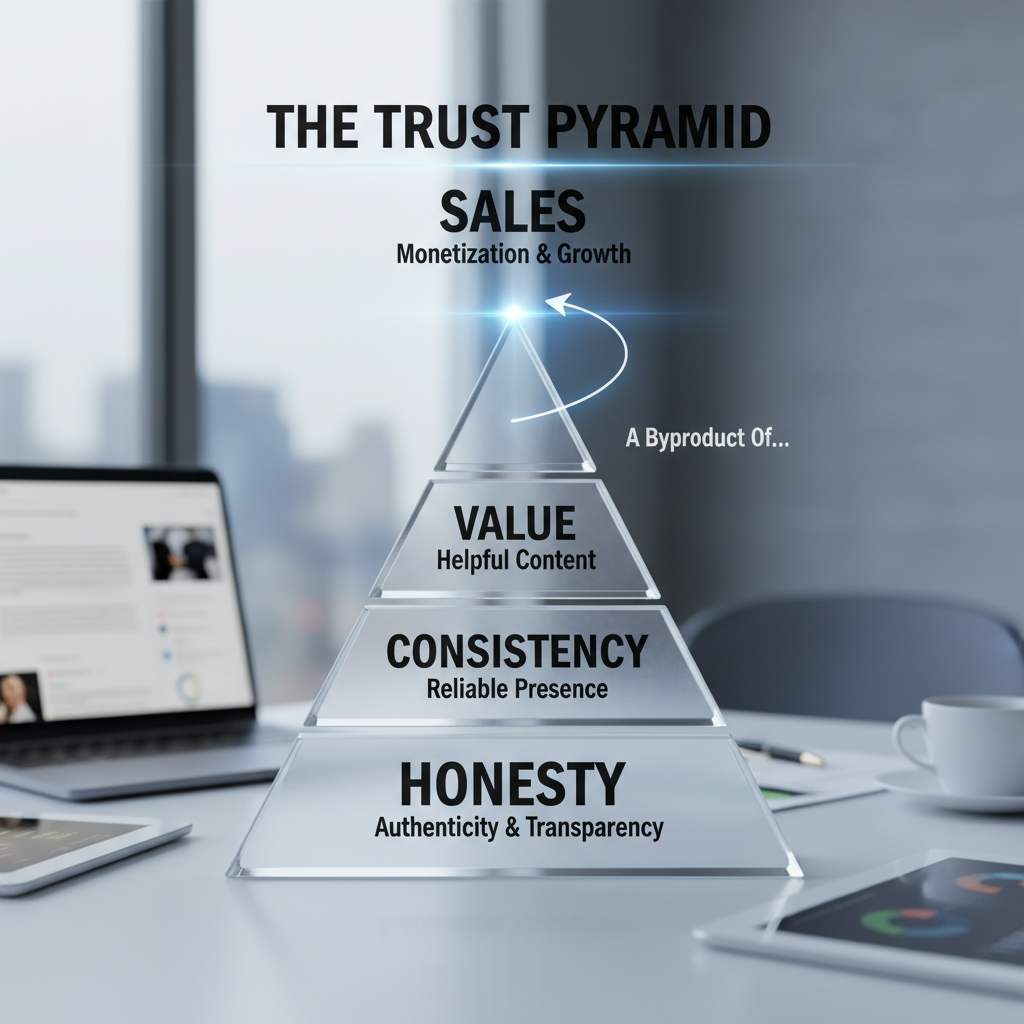
But here is the good news: You don’t have to choose between ethics and earnings. In fact, the most profitable creators today are using what I call the “Trust-First” framework. By prioritizing transparency and rigorous vetting, they aren’t just sleeping better at night—they are earning significantly higher commissions through increased conversion rates and customer loyalty.
This guide isn’t just about feeling good. It’s about the strategic advantage of honesty. We’re going to cover the psychology of trust, the new 2025 FTC disclosure rules you can’t ignore, and how to vet products so thoroughly that your recommendation becomes the final word for your audience.
The Authenticity Shift: Why Ethics Pays More in 2025
I used to think “authenticity” was just a buzzword marketing agencies threw around in slide decks. But looking at the data from the last twelve months, it’s clear that authenticity has become a hard economic metric. The era of the polished, perfect “salesperson” influencer is dead. The era of the “Trusted Advisor” is here.
This shift is driven largely by a sophisticated audience that can smell a cash-grab from a mile away. According to a February 2024 report from Rebelbuzz Agency, consumers are increasingly quick to spot inauthenticity, noting that “authenticity is the currency of trust.” If you break that currency, you’re bankrupt.
The “Gen Z Paradox”
Here is where it gets interesting, and where many creators get it wrong. We assume “authentic” means “low production value” or “messy.” But the data tells a nuanced story.
The July 2024 Sprout Social Index highlights a fascinating generational divide. Only 35% of Gen Z prioritize “authenticity” (in the traditional sense of raw vibes) compared to 50% of Boomers. However, Gen Z drives the highest volume of social commerce. What does this mean?
It means Gen Z doesn’t just want you to *look* real; they want you to *be* entertaining and transparent. They accept that you are selling something—they just demand you be honest about it. They value the entertainment and the transparency of the transaction more than the illusion that you’re just “hanging out.”
The ROI of Trust: Long-term CLV vs. Short-term Clicks
If you promote a bad product to make a quick $500, you might win today. But you lose the Customer Lifetime Value (CLV) of that reader. Conversely, when you refuse to promote garbage, you build “social equity.”
Consider the “De-Influencing” trend that swept TikTok in 2023 and 2024. Creators started telling audiences what not to buy. The result? Creators who adopted this strategy saw engagement spikes of 30%+, based on inferences from Sprout Social data. By saving your audience money on bad products, you earn the right to recommend good ones later.
According to DemandSage (Oct 2024), businesses earn an average of $6.50 for every $1 spent on affiliate marketing. But for creators, the return on honesty is higher retention. You aren’t just acquiring a click; you’re retaining a follower who will click again next week.
The Vetting Protocol: Never Promote What You Haven’t Tested
The cardinal rule of ethical affiliate marketing is simple: If you haven’t used it, don’t link it.
I know, I know. It’s tempting. You see a high-ticket software program that fits your niche perfectly, and everyone else is promoting it. But if you recommend it and the interface is buggy, that’s on you. Your audience doesn’t blame the software company; they blame the person who sent them there.
The “Grandmother Test”
I apply a simple filter to every potential partnership, which I call the “Grandmother Test.” If I recommended this product to my grandmother (or best friend), and they called me a week later upset because it broke or had hidden fees, how would I feel? If the answer is “guilty” or “embarrassed,” I decline the partnership.
How to Audit a Brand’s Reputation
Before you sign up for an affiliate program, you need to do due diligence. Here is the process I use:
- Check Refund Rates: Ask the affiliate manager directly. “What is your current refund rate?” If it’s above 10-15% for a digital product, run.
- Search for “Brand + Scam/Complaints”: Look at TrustPilot and Reddit. Ignore the testimonials on their sales page; look for the angry customers on third-party sites.
- Test Support Channels: Send a generic support ticket to the company before you join. See how fast they reply. You are sending your people to them; you need to know they’ll be taken care of.
Negotiating “Honesty Clauses”
This is a pro move that very few affiliates utilize. When discussing terms with a brand, I ask for permission to mention “cons” or downsides. I explain that a review with only positives looks fake and converts lower.
Most reputable brands agree. They know that saying, “This software is amazing for X, but if you need Y, it’s not for you,” actually increases conversions for the right audience because it builds credibility. A August 2024 FTC ruling banned fake reviews, which underscores that the regulatory environment is pushing us toward this level of honesty anyway.
Mastering the “Unavoidable Disclosure” (FTC 2024 Compliance)
Let’s talk about the legal side. In the past, you could bury a tiny `#ad` in a sea of hashtags and call it a day. Those days are over. The Federal Trade Commission (FTC) has updated its guidelines, and they are cracking down hard.
According to inBeat Agency’s March 2025 update, violations of FTC disclosure guidelines can result in fines of up to $51,744 per incident. That is a career-ending number for most creators.
Beyond #ad: The “Clear and Conspicuous” Standard
The standard is no longer just “did you disclose it?” It is: “Is the disclosure unavoidable?”
Legal experts at Hall Render Health Law Firm (Nov 2024) emphasize that relying solely on a platform’s built-in “Paid Partnership” tool is insufficient. While those tools are helpful, the FTC wants the disclosure to be part of the content itself.
Video Disclosures: Visual & Audible
With the explosion of short-form video—which HubSpot’s 2024 State of Marketing Report identifies as having the highest ROI—video disclosures are critical. The FTC guidelines state that for video, the disclosure must be made in the video itself.
If you are doing a TikTok or Reel recommending a product, you cannot just put the disclosure in the caption. Why? because users can watch the video without ever reading the caption.
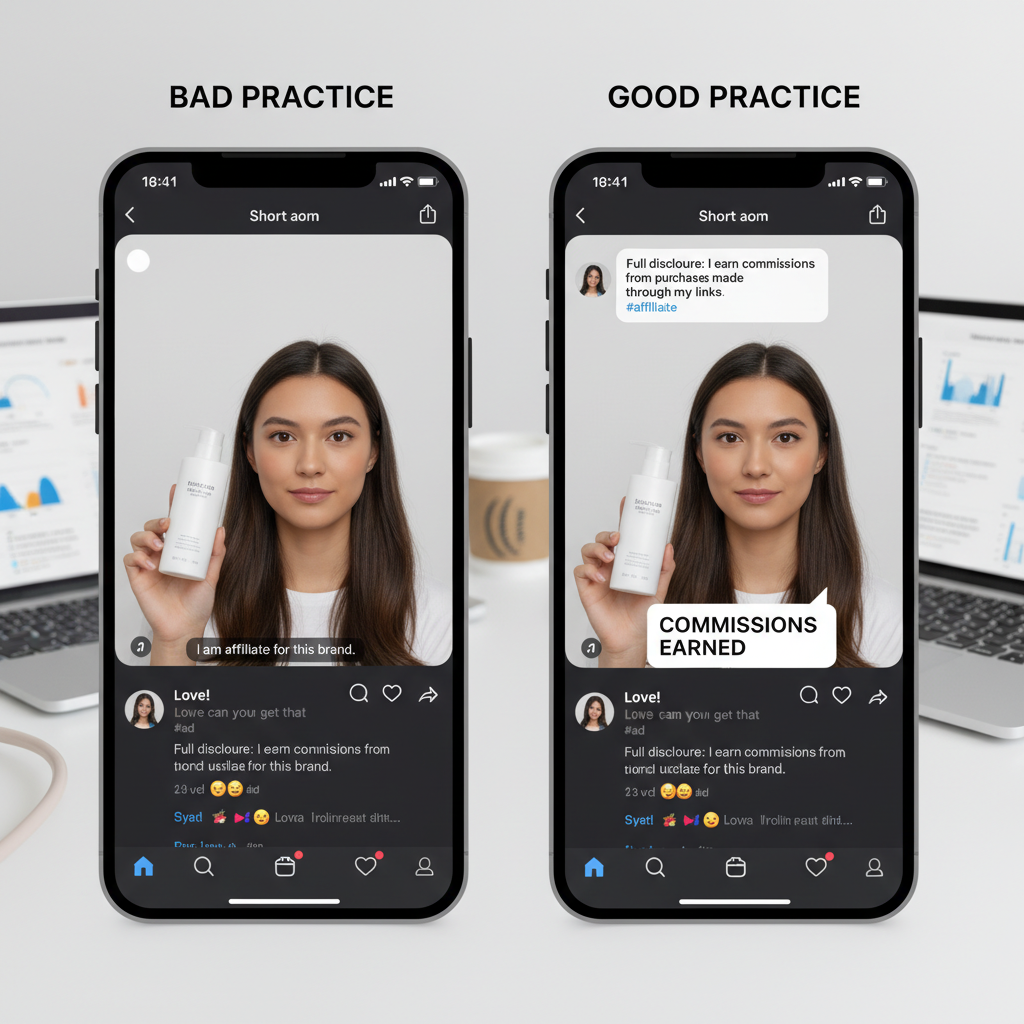
My recommended video disclosure workflow:
- Visual: Place text on screen for the first 3-5 seconds that says “Ad,” “Sponsored,” or “Commissions Earned.”
- Verbal: Say it naturally. “I loved this product so much I became an affiliate, so I do earn a commission if you grab it through my link.”
You might worry this kills conversions. It doesn’t. It signals confidence. You are telling the viewer, “I am a professional, and I stand by this recommendation enough to stake my legal reputation on it.”
High-Converting “Ethical” Content Formats
Once you have vetted the product and understood the legalities, how do you create content that sells without sounding salesy? You need to pivot from “pitching” to “educating.”
The “Warts and All” Review
The most effective review format in 2025 is the balanced critique. A purely glowing review triggers skepticism. Instead, structure your content like this:
- What it is: Brief overview.
- Who it’s for: Specific demographics (e.g., “Beginner bloggers on a budget”).
- The Good: Top 3 features.
- The Bad: 1 or 2 genuine drawbacks (e.g., “The customer support is slow on weekends”).
- The Verdict: A qualified recommendation.
This approach leverages the psychological principle of “damning with faint praise”—but in reverse. By admitting a flaw, you prove you aren’t a shill, which makes your praise of the good features significantly more believable.
Storytelling Bridges
Don’t just list features. Connect a personal struggle to the product solution. PostAffiliatePro data from Nov 2024 shows the industry is growing toward $31.7 billion, driven largely by creators who can tell stories.
Instead of saying, “Buy this noise-canceling headphone,” say: “I work from a coffee shop, and last week the blender noise was driving me crazy. I couldn’t focus on my writing. I finally bought these headphones, and for the first time in months, I wrote for three hours straight.”
You are selling the result (focus), not the product (headphones).
Measuring Success Beyond the Click
Ethical marketers don’t just look at their bank accounts; they look at their audience health. To know if you are maintaining trust, you need to track metrics that go deeper than commissions.
Tracking “Return on Trust”
Monitor your engagement rates immediately following a promotional post. If your non-promotional posts get 50 comments, but your affiliate posts get 2 comments and they are all negative, you have a “Trust Leak.”
Also, keep an eye on refund rates within your affiliate dashboards. High refunds mean your audience felt deceived by the product you recommended. If you see this, stop promoting that product immediately and apologize to your audience. It happens to the best of us, but how you handle it defines your brand.
Ensure your ethical disclosures and content look good on phones. According to DemandSage (Oct 2024), mobile traffic constitutes approximately 62% of affiliate-driven visits. If your disclosure is hidden behind a “read more” button on mobile, you are non-compliant.
FAQ: Common Ethical Dilemmas
Does disclosing links lower conversion rates?
No. Multiple studies suggest that clear disclosures actually increase perceived trustworthiness. When a user knows you are being paid, but you still offer a balanced review, they view you as a professional rather than a hidden advertiser.
What if I haven’t personally used the product?
If you absolutely must promote something you haven’t used (perhaps it’s a software for an operating system you don’t own), be explicitly clear about it. Say, “I haven’t tested this personally because I use Mac, but my research shows it’s the industry standard for Windows users.” Never fake personal experience.
How do I fix a mistake if I promoted a bad product?
Own it. Send an email or make a post saying, “Hey guys, I recommended X last month. After using it more, I realized it has issues with Y. I’m removing my recommendation and I apologize.” This level of vulnerability usually cements loyalty for life.
Conclusion
The affiliate marketing landscape is projected to reach $31.7 billion by 2031, but the creators who will capture the lion’s share of that wealth aren’t the ones with the trickiest funnels or the most aggressive sales copy.
The winners will be the ones who treat their audience like intelligent human beings. They will be the creators who prioritize legal compliance not because they fear fines, but because they respect their viewers. They will be the ones who understand that a commission is not a payment for a sale—it is a reward for trust.
Audit your links today. Check your disclosures. And ask yourself the hard question: “Would I buy this based on my own recommendation?” If the answer is yes, you’re on the right path.
Time for a Trust Audit?
Take 10 minutes today to review your top 5 performing posts. Add clear disclosures, verify the products still hold up, and ensure you’re compliant with 2025 standards. Your reputation is worth the work.